
Allied Oil Inc
Diesel Fuel & Jet Fuel
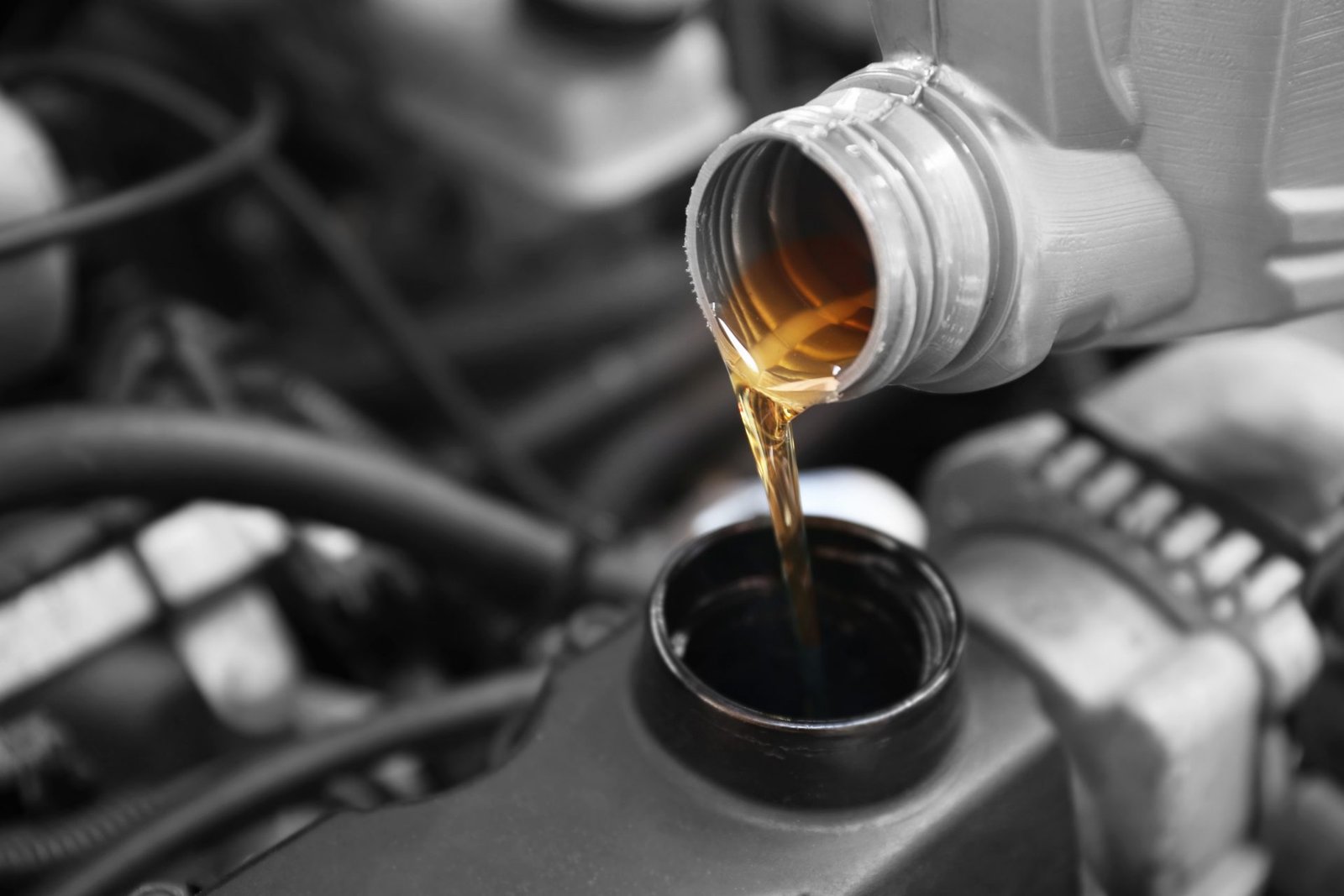
Diesel fuel
Why use Diesel?
- #1. You want to join the Development Trend
The general aviation industry (aircraft that is smaller and non-scheduled) is set to become an alternative to scheduled commercial air transportation. This is possible because non-scheduled aircraft provide unmatched transportation flexibility.
General aviation also provides important public services such as remote location access and emergency medical evacuation.
Fixed Based Operators make use of new diesel engine options in general aviation aircraft as well as in trucks and off-road equipment. Equipment needed to service and maintain aircraft also mostly rely largely on diesel technology.
- #2. Diesel engines boost efficiency
Many of these service vehicles are powered by diesel engines. They rely on the power, performance, reliability, durability, and economic operation offered by diesel technology. With proper maintenance and servicing, diesel engines will ensure maximum uptime and readiness.
And guess what?
- #3. Diesel is Green
When we talk about environmentally friendly options in aviation, there have been a lot of new innovations in the aviation industry.
Leaders in general aviation in the U. S. like Cessna, American Champion Aircraft, Continental Motors, DeltaHawk Engines, and Lycoming have all announced the development or introduction of new diesel engine options.
Diesel fuel is a great environmentally friendly option. A diesel engine has no carbon monoxide poisoning possible, no lead emission, comparable lower nitrogen oxide, and hydrocarbon emission.

Jet fuel
Types of Aviation Fuel
Fuel is one of the most crucial requirements for flight operations. In fact, it is the lifeblood of aviation. Every flight operator needs a reliable supply of clean and consistent fuel. Unfortunately, some are still confused as to what the different types of aviation fuels are and where to use each type.
So, perhaps you’ve wondered- What are the different types of aviation fuel? What are the differences between the various types? What type of aviation fuel is suitable for certain aircraft?
This post has all the answers, so just keep on reading!
What Type of Fuel Does My Plane Require?
Each aircraft engine is built to burn a certain type of fuel. Using anything other than the kind of fuel specified by the manufacturer is simply a recipe for disaster. The same applies for mixing different types of fuels. It will not end well.
So, what type of fuel should you use? The answer to that depends on the type of engine your aircraft uses. In aviation, there are two major types of fuel. There is the turbine-engine fuel commonly referred to as Jet fuel and the reciprocating-engine fuel, also known as AVGAS (short for aviation gasoline).
Just like the name suggests, Jet fuel is primarily used to power jet engines, which depend on the powerful momentum of expelled air to drive the plane forward. On the other hand, power piston engines aircraft that depend on the rotation of their propellers to generate thrust use AVGAS.
Various modern turboprop planes also use Jet fuel since they have engines with a gas turbine that power their propellers.
Let’s look further into these major types of aviation fuel.
Major Types of Aviation Fuel
There are several types of aviation fuel available all around the globe. However,
general aviation aircraft like commercial airplanes and private jets widely
use and depend on two main types of airplane fuel: AVGAS and Jet Fuel.
AVGAS
Reciprocating engines run on gasoline, also referred to as AVGAS. AVGAS is particularly designed for use in aircraft engines. It powers small piston engine aircraft, usually flown by private pilots, flying clubs, or aviation training schools.
Combustion discharges energy in the fuel, which converts into the mechanical motion of the engine. Reciprocating engines operate according to the same fundamental principles as the spark ignition engines used in automobiles. However, since flight requires much greater performance, it calls for a more high-octane fuel.
Aviation gasoline of any kind is primarily a hydrocarbon compound distilled from crude oil by fractional distillation. It’s different from jet fuel which is refined for use in turbine-powered aircraft.
Jet fuel being a kerosene-type fuel has a much higher flash point and so is less flammable than AVGAS. Aviation gasoline, on the other hand, has a low flash point and is quite volatile and extremely flammable.
There are more AVGAS-fueled aircraft than Jet-fueled airplanes currently in use. However, most of the AVGAS-fueled aircraft are small and short-range. As such, the overall volume of AVGAS sold is small compared to that of Jet fuel.
The two main grades of AVGAS currently in use are 100 and 100LL (low lead).
AVGAS 100 is the standard high-octane aviation fuel used by small piston engines. This fuel is dyed green and has a high lead content. AVGAS 100LL has a similar makeup, but is dyed blue and has a lower lead content.
Het idee achter 1red casino is helder: een casino-ervaring creëren die zowel beginners als gevorderden aanspreekt. De streamkwaliteit komt meestal tot Full-HD of zelfs 4K-resolutie. Dagelijkse, wekelijkse en maandelijkse uitbetalingslimieten zijn afhankelijk van de VIP-status van de speler. De promo-sectie toont lopende acties met de resterende looptijd. Touch-bediening en intuïtieve menu’s zorgen voor een prettige mobiele speelervaring. Gratis spins op populaire slots vormen vaak onderdeel van de eerste promoties voor nieuwe inschrijvingen. Het platform werkt onder een officiële gokvergunning van een erkende toezichthoudende autoriteit. De live chat is met één klik vanuit elke casino-sectie bereikbaar. Met dit platform betreedt de markt een aanbieder die serieuze ambities heeft.
Jet Fuel
Aircraft with turbine engines use a different type of fuel than the kind used by reciprocating aircraft engines.
Commonly referred to as jet fuel, turbine engine fuel is formulated for use in turbine engines. It should never be mixed with AVGAS or introduced into the fuel system of a reciprocating aircraft engine.
Jet fuel is usually a straw-colored or colorless liquid. It has two most widely used categories: Jet A and Jet A-1. The major difference between both categories is the freeze point.
Developed in the 1950s, Jet A is primarily used in the United States. This fuel has a freeze point of minus 40ºC or below. On the other hand, Jet A-1 used more commonly in locations outside of the US, has a lower freeze point of minus 47ºC or below.
Another key difference between both fuels is the additives contained within each. For instance, Jet A normally does not contain any static dissipater additives, whereas most Jet A-1 does.
Although both categories of jet fuel are manufactured to distinct specifications, they can still be used interchangeably.
Jet B:
This is used in extremely cold regions such as the north of Canada. It has a very low freezing point of minus 60°C and contains approximately 70% gasoline and 30% kerosene. This composition makes Jet B more flammable than Jet A and, as such, more dangerous to handle. However, its lower flash point is ideal for the cold starting of aircraft.
JP-8:
This can be seen as the military equivalent of the Jet A-1. The JP-8 has some additional ingredients, including corrosion inhibitors and anti-icing additives. It is the Jet fuel grade most commonly used by NATO air forces.

TS-1:
This is the primary grade of Jet fuel available in the CIS states and Russia. Compared to Jet A-1, this fuel is more volatile but has a lower freeze point of minus 50°C. This makes it vital for operations in these colder climates.
JP-5:
This is a kerosene-based fuel with a high flash point. It is mainly used for military aircraft based on aircraft carriers.
Aviation Fuel Additives
There are certain chemicals that can be added to aviation fuels to improve their overall performance, or to meet the particular requirements of certain aircraft operators or models. These chemicals are additives.
The different varieties of Jet fuel have considerably varying content. The difference is even more significant between those intended for military and civil use. For AVGAS though, the additive components tend to be fairly standard.
The quantity of additives used is usually minuscule and is only measurable in parts per million. All additives have to go through a rigorous evaluation process before they are approved for use.
Allied Oil Inc.
Allied Oil Inc. has been supplying fuel to a diverse range of operators for years on end. We have an extensive portfolio of suppliers, all of which are subject to a stringent auditing process. We carry out inspections regularly to ensure that only the highest quality aviation fuel is delivered at all times.
Our Jet fuel price is very competitive, both for Jet-A1 and Jet A variants. We can also arrange for AVGAS and other exotic fuels when required at the best prices in the market.
If you have any questions about the types of aviation fuel, their availability, or pricing go ahead and reach out to our team. We’ll be delighted to assist.